

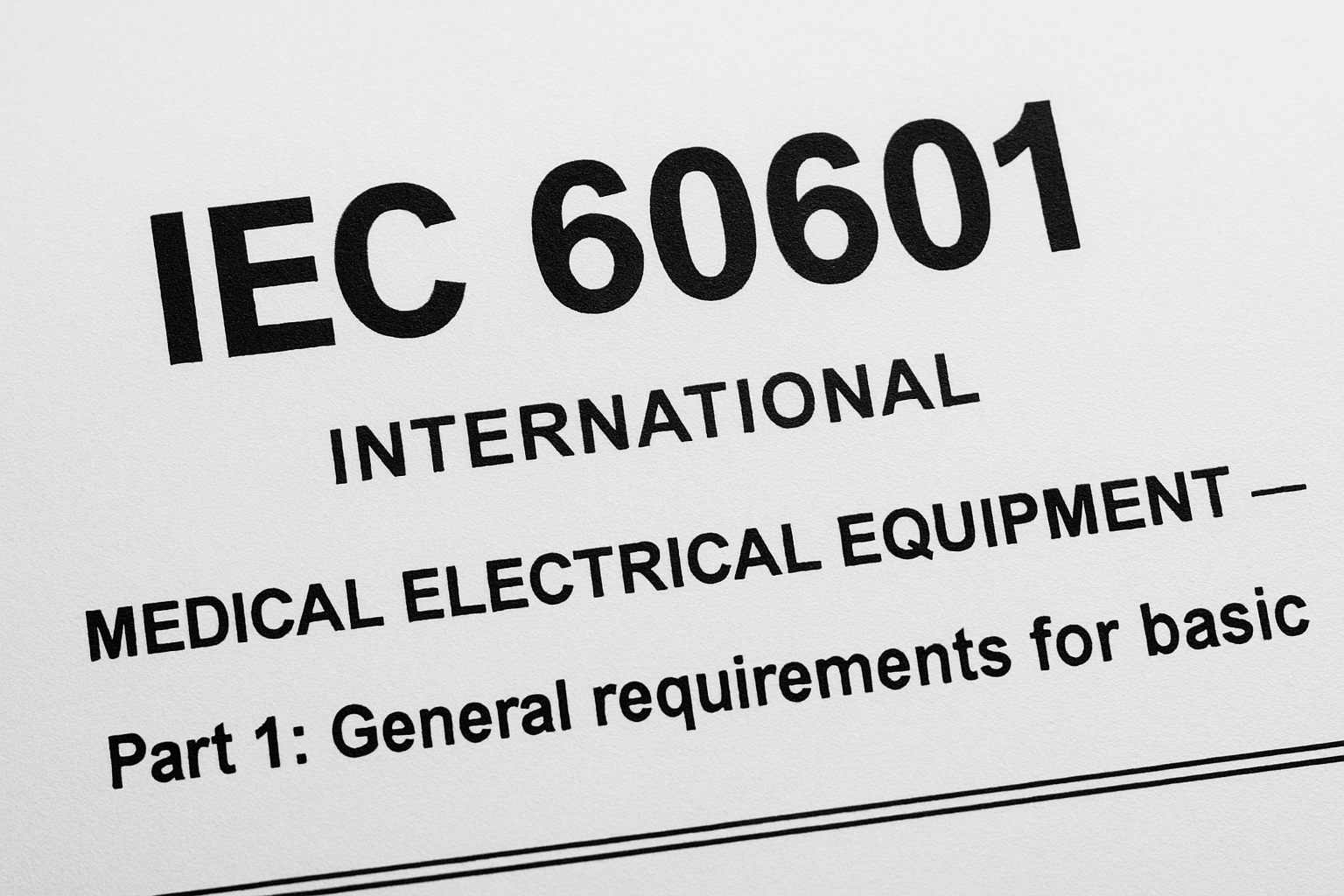
One of the most important standards governing the design and manufacturing of medical electrical equipment is IEC 60601. Whether you are developing a medical device, integrating equipment into a system, or designing supporting products such as medical carts, understanding IEC 60601 is essential.
What is IEC 60601?
IEC 60601 defines the general safety and essential performance requirements for medical electrical equipment and medical electrical systems and is a part of an international series of standards developed by the International Electrotechnical Commission (IEC).
IEC 60601 is designed to ensure that medical electrical equipment operates safely in clinical environments and poses no unacceptable risks to patients, clinicians, or nearby equipment.
Why IEC 60601 Matters
Medical environments are uniquely complex. Devices are often used in proximity to patients, connected to other equipment, and operated under demanding conditions. IEC 60601 addresses these challenges by setting requirements for electrical, mechanical, and thermal safety while also considering risk management and performance.
IEC 60601 and Regulatory Compliance
While IEC 60601 is not a law, it plays an important role in medical device regulation worldwide. Regulatory bodies such as the FDA in the United States, the European Union under the Medical Device Regulation (MDR), and other global authorities recognize IEC 60601 as a consensus standard for demonstrating electrical safety and essential performance.
Key Parts of the IEC 60601 Series
IEC 60601 is not a single regulation but a part of a group of standards. Some of the most common include:
- IEC 60601-1: General Requirements for Basic Safety and Essential Performance
- This core standard establishes baseline safety requirements, including protection against electrical shock, mechanical hazards, excessive temperatures, and fire risks.
- IEC 60601-1-2: Electromagnetic Compatibility (EMC)
- This standard addresses how equipment manages electromagnetic emissions and immunity.
- IEC 60601-1-6: Usability
- Focuses on usability engineering to reduce the risk of use errors.
- IEC 60601-1-8: Alarm Systems
- This standard defines requirements for alarm signals related to safety-critical conditions.
- IEC 60601-2-x: Particular Standards
- The IEC 60601-2 series includes device-specific requirements for certain types of medical equipment, such as infusion pumps, monitors, or imaging systems.
Ultimately, manufacturers must determine which parts of the IEC 60601 series apply based on how their product is configured, what devices it supports, and the environments in which it will be used. Identifying these requirements early helps ensure safer designs, smoother testing, and more efficient regulatory pathways.
IEC 60601 and Medical Carts
IEC 60601 applies not only to medical devices, but also to medical carts that support powered equipment. Carts with integrated power, batteries, or mounted devices may be considered part of a medical electrical system, making IEC 60601 a critical design consideration. Addressing this standard early helps reduce integration risk and supports safer, more compliant clinical solutions.
By building medical carts with IEC 60601 considerations from the start, we help our partners bring compliant, dependable solutions to market while supporting the highest standards of safety for clinicians and patients alike.
Frequently Asked Questions About IEC 60601-1
Is IEC 60601 Mandatory?
The application of IEC 60601 standards is not required by law. However, compliance with IEC 60601 is a prerequisite for market launch of medical equipment in the United States, Europe, and in many other countries around the globe. In order to speed up any required approvals and prevent costly redesigns or vicious rework cycles, it is considered global best practice to adhere to and comply with the IEC 60601 standard.
Is IEC 60601 Compliance Required For Medical Carts?
Start with this question: Is the cart a medical device? The answer is most likely yes. If a cart is necessary to the function of the device it is being used with - then the cart itself is considered a device and testing will be required.
Carts that are used as furniture that do not correlate with care do not require compliance with IEC 60601.
What Does IEC stand for?
IEC stands for International Electrotechnical Commission which is an organization that creates global regulations for electric and technology products.