
Hospitals, clinics, and medical device manufacturers all rely on equipment that keeps workflows moving and ensures clinicians have the necessary resources at the point of care. One piece of equipment that plays a central role in achieving this is the medical cart.
But what is a medical cart, exactly, and why has it become such a strategic asset for modern healthcare organizations?
This guide breaks down what a medical cart is, the value it provides, and why more organizations are turning to custom cart solutions built around their devices, workflows, and long-term growth.
What Is a Medical Cart?
A medical cart is a mobile workstation designed to store, organize, transport, and support medical equipment, devices, and supplies. Medical carts help clinicians perform tasks efficiently by bringing the right tools directly to the point of care.
While the concept may seem simple, today’s medical carts have evolved into highly specialized, engineered platforms customized for specific clinical applications, ranging from diagnostics and telemedicine to surgical tools, imaging systems, and therapy devices.
Key Features of a Medical Cart
Medical carts may vary widely depending on their purpose, but most share a core set of features that support usability, safety, and mobility in clinical environments. High-quality medical carts combine thoughtful engineering with durable construction to ensure reliable performance at the point of care. Common features include:
Mobility and Maneuverability
Smooth, medical-grade casters allow carts to move easily through hallways, between patient rooms, and around tight clinical spaces. Features like locking casters, directional control, and low-push-force design help maintain stability and ease of movement.
Durable Structural Design
Medical carts are built from robust materials—such as steel, aluminum, and high-grade polymers—to withstand daily use, cleaning, and disinfectants. Their frames and components are engineered for long-term strength and stability, especially when supporting heavy or sensitive devices.
Organized Storage and Accessibility
Drawers, shelves, bins, and modular compartments keep supplies and equipment organized and quickly accessible. Many carts use customizable storage layouts, allowing clinicians to position items based on workflow needs.
Device Mounting and Support
Custom mounting solutions, articulating arms, brackets, and reinforced platforms ensure equipment is securely supported. These features are essential for carts designed around electronics, monitors, imaging systems, or specialty devices.
Power and Cable Management
For devices requiring power, integrated power systems, battery options, and cable management channels maintain safety and prevent clutter. Effective cable routing also reduces strain on connections and improves overall reliability.
Ergonomics and Adjustability
Height-adjustable work surfaces, monitor arms, grab handles, and user-friendly controls help clinicians work comfortably and reduce fatigue. Ergonomic design also improves usability, especially during repetitive tasks.
Infection Control Features
Smooth surfaces, sealed edges, antimicrobial materials, and easy-to-clean components support infection prevention protocols. Many carts are designed to withstand harsh cleaning agents used in healthcare environments.
Security Options
For medication or sensitive devices, carts may include locking drawers, badge-access systems, or controlled-access compartments. These security features support regulatory compliance and patient safety.
Integrated Technology
Modern medical carts often include built-in PCs, displays, communication tools, diagnostic modules, or connectivity features. This integration transforms the cart into a mobile workstation or a complete clinical device platform.
Custom Branding and Aesthetics
Color accents, molded components, branded panels, and cohesive industrial design create a professional look that reinforces a manufacturer’s identity and differentiates their product in the market.
Regulatory Considerations
Many carts, especially those carrying electrical or diagnostic equipment, are built to support compliance with safety standards such as IEC 60601-1. Features like proper grounding, stability, labeling, and structural testing help ensure clinical safety and regulatory readiness.
Types of Medical Carts
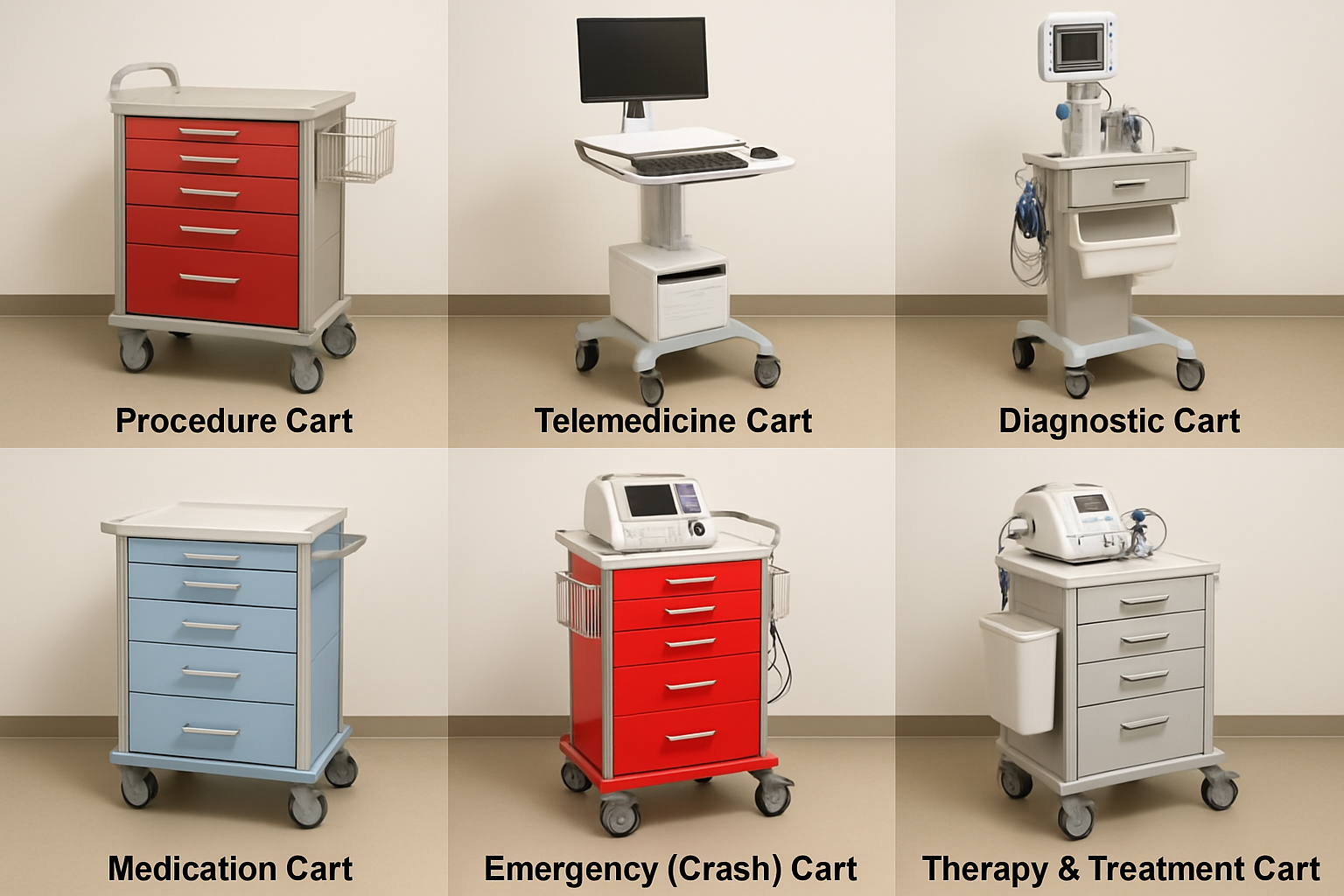
Because "medical cart" is such a broad term, carts are often categorized by function. Common types include:
Procedure Carts
Used for storing instruments, reagents, and clinical supplies needed for routine procedures. These carts emphasize organization, durability, and quick access.
Telemedicine Carts
Designed to support remote care with cameras, displays, PCs, networking equipment, and communications tools.
Diagnostic Carts
Built to support imaging devices, monitors, ultrasound systems, and other diagnostic equipment that require stability and secure mounting.
Medication Carts
Secure, often lockable carts used for storing, organizing, and dispensing medications safely.
Emergency (Crash) Carts
Fully stocked for rapid response, featuring life-saving medications, defibrillators, and critical supplies—designed for immediate access under pressure.
Therapy & Treatment Carts
Configured for respiratory therapy, rehabilitation, and other specialized treatments requiring device-specific support.
Custom OEM Carts
Purpose-built around a specific device or system. These carts often include custom structures, mounting solutions, cable routing, branding, regulatory support, and workflow-driven design.
As medical devices continue advancing, OEMs increasingly rely on custom carts to meet the functional, safety, and performance standards their innovations require.
Why Create a Custom Medical Cart
As medical devices become more advanced, off-the-shelf carts often can’t meet the requirements for safety, usability, or integration. Custom medical carts provide purpose-built solutions that align with your equipment, workflow, and brand.
1. Seamless Device Integration
Custom carts are engineered around your device, ensuring proper mounting, stability, cable routing, and overall usability.
2. Better Workflow Efficiency
When a cart matches real clinical workflows, staff can work faster and more intuitively, reducing setup time and improving patient care.
3. Stronger Brand Identity
Custom colors, materials, and design elements help your product stand out and reinforce your brand in clinical settings.
4. Regulatory & Safety Support
Purpose-built carts can be designed to meet the specific compliance, safety, and infection-control needs of your device and environment. HUI offers expertise in IEC 60601-1, along with preliminary testing to eliminate variables before your official testing.
5. Protection for High-Value Equipment
Tailored designs offer the right structural support and housing to protect sensitive electronics and components.
6. Scalable for Growth
A repeatable, manufacturable cart design supports consistent production and smooth product expansion.
7. Competitive Differentiation
Thoughtful cart design improves the overall user experience, setting your device apart in a crowded market.
Custom carts elevate device performance, streamline workflows, and create a polished, market-ready solution that reflects your commitment to quality.
Custom Medical Carts
Medical carts play a critical role in supporting devices, streamlining workflows, and improving clinical efficiency. Understanding what a medical cart is—and the value of custom design—helps businesses choose solutions that truly meet their equipment and workflow needs.
Custom carts offer better device integration, stronger branding, and greater usability than off-the-shelf options. For OEMs and healthcare organizations, they provide a reliable, purpose-built platform that enhances both product performance and the overall user experience.
If you’re looking to develop a custom medical cart that elevates your device and supports your customers, we’re ready to help you take the next step.
Ready to Develop a Custom Medical Cart?
If you’re looking to create a custom medical cart that elevates your device and supports your customers’ workflow, we can help you take the next step. From concept engineering and prototyping to design for manufacturing, we build solutions that align with your device, your brand, and your long-term goals.
Because we are a division of HUI Manufacturing, our team can also provide you with OEM centric, end-to-end manufacturing solutions that include robust domestic manufacturing capabilities and low to mid volume production runs.