

In fast-paced clinical environments, how a medication cart is organized can directly impact efficiency and patient safety. While medication carts may look simple, the internal layout, and storage configuration all play important roles in supporting healthcare teams.
For organizations evaluating new carts or OEMs developing medication cart solutions, a solid understanding of medication cart organization helps guide which design features should be prioritized. This guide outlines best practices for organizing medication carts and highlights how thoughtful cart design enhances workflow and patient care.
Why Medication Cart Organization Matters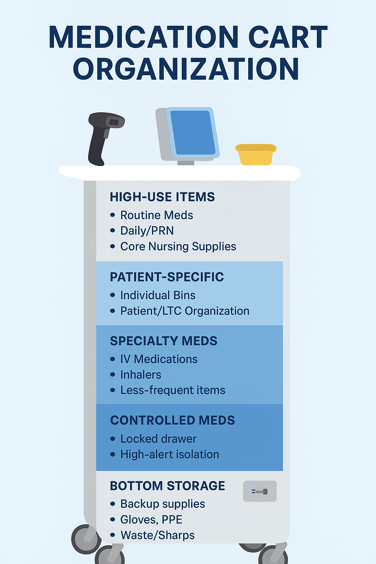
Medication management is one of the most carefully monitored aspects of patient care. Even small inefficiencies like cluttered drawers, poor labeling, or awkward storage can slow the care process and introduce risk.
A well-organized medication cart supports:
- Faster medication administration
- Reduced risk of errors
- Better compliance with security protocols
- Less time spent searching for supplies
- A smoother workflow for nurses and pharmacy teams
- Improved patient confidence and experience
The right organization system not only keeps the cart clean—it helps clinicians stay focused and efficient.
How to Organize a Medication Cart: Best Practices
Below are strategies and organization principles widely used across healthcare settings.
1. Group Medications by Category or Frequency of Use
Start with a logical structure that aligns with how your team works.
Common organization methods include:
- By medication type: antibiotics, analgesics, IV meds, inhalers, etc.
- By patient or room number: particularly useful for long-term care settings.
- By frequency of use: daily meds at the top; PRNs in a separate labeled area.
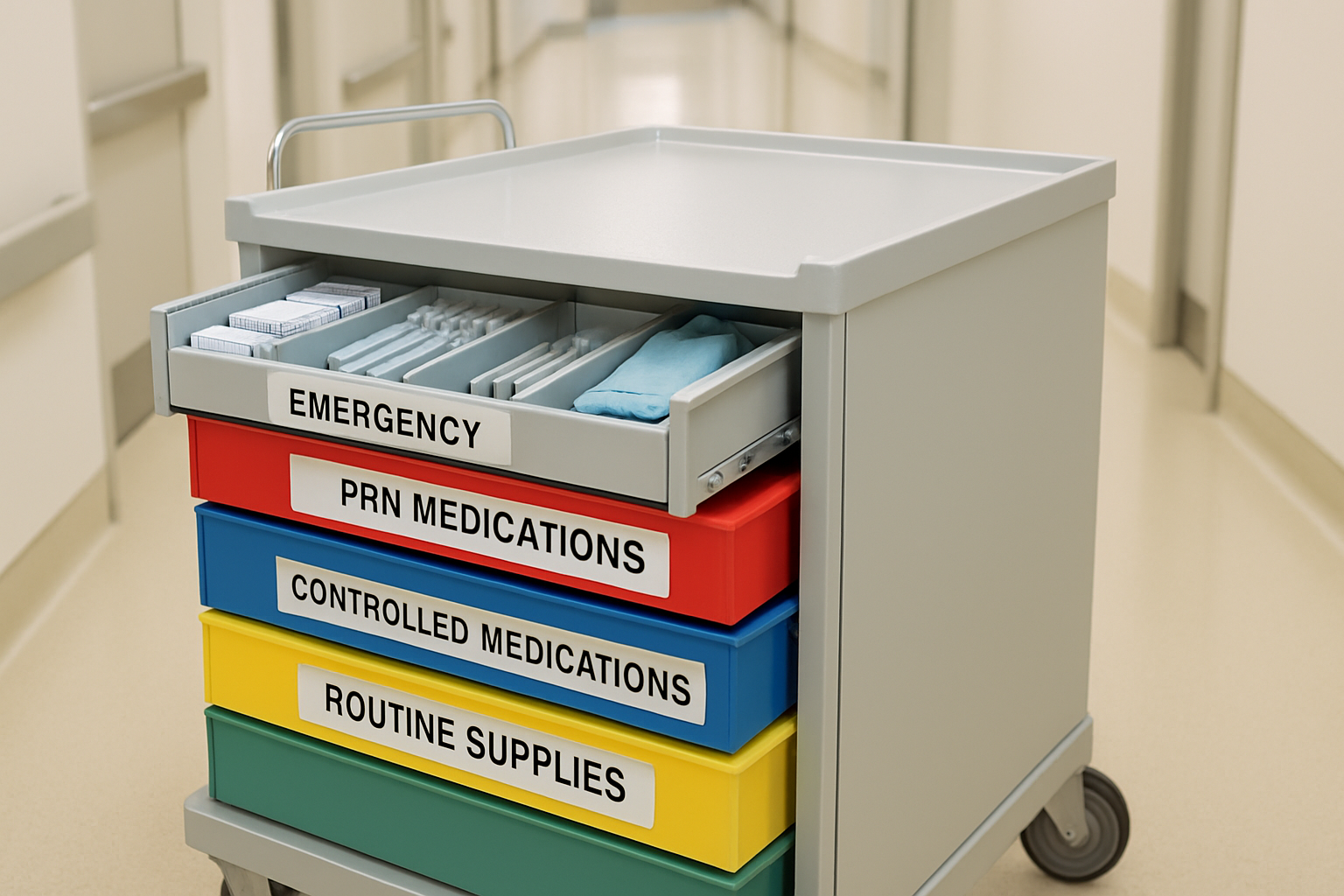
2. Use Color-Coding for Quick Identification
Color-coded drawers, labels, or dividers help staff locate items quickly while reducing cognitive load.
Popular systems include:
- Red = emergency or high-alert medications
- Blue = PRNs
- Yellow = controlled medications
- Green = routine medications and supplies
Manufacturers can assist by designing carts with customizable color panels, drawer faces, or interchangeable tags.
3. Designate a Drawer for High-Alert or Controlled Substances
Controlled medications should be stored securely and separately. On a medical cart, use a lockable drawer with controlled access, keep high-alert medications isolated or clearly labeled and maintain an inventory system that supports documentation requirements.
OEMs may incorporate electronic locks, audit trails, or biometric access for added safety.
4. Keep Essential Supplies Easily Accessible
Beyond medication storage, clinicians need quick access to routine supplies, like syringes, alcohol pads, gloves, saline flushes and medication cups. Place these items in upper drawers or front compartments to streamline medication distribution.
5. Use Dividers, Bins, and Modular Inserts
A medication cart is most effective when it’s customizable.
Add:
- Adjustable dividers
- Removable bins
- Modular drawer inserts
- Label holders
6. Establish a “Reset” Routine for Each Shift
Medication carts stay organized only when there's a process for maintenance.
A shift-ending “reset” can include restocking core supplies, wiping surfaces and handles, emptying trash compartments, checking expiration dates, reorganizing misplaced items, and securing controlled medications.
7. Maintain Clean, Wipeable Surfaces
Infection control is a top priority. Keep the cart clean by ensuring:
- All surfaces are easily disinfected
- Handles, touchpoints, and tops are wiped regularly
- Used items are disposed of before restocking
Manufacturers can support this by designing carts with seamless, easy-clean materials.
8. Tailor Organization to Your Facility’s Needs
Every care environment is different. Medication carts may need customization based on:
- Acute care vs. long-term care
- Number of patients served
- Units with specialized needs (ICU, oncology, pediatrics)
- Storage and mobility requirements
For OEMs developing new medication carts, engineering teams can tailor drawer layouts, lock systems, height adjustments, and workflow modules to match real-world use.
How a Well-Designed Medication Cart Improves Organization
While internal organization is essential, the cart itself plays a major role. Manufacturers like HUI Medical Carts integrate features that naturally support better medication organization, including:
- Modular drawer systems
- Soft-close, full-extension runners
- Locking and non-locking configurations
- Electronic access control
- Custom labeling systems
- Ergonomic work surfaces
- Lightweight but durable construction
- Seamless, easy-clean designs
- Color-coded drawer fronts
- Casters designed for quiet, smooth movement
Purpose-built engineering ensures the cart works with the clinical workflow, not against it.
Custom Medication Carts for Better Workflow Performance
If your healthcare organization or OEM device team is looking for a cart that supports precise medication workflows, a custom cart may be the best solution.
Instead of adapting your workflow to a cart, a custom cart adapts to your workflow, resulting in safer, faster, and more intuitive medication delivery.