
Navigating the medical cart testing process may seem overwhelming at first, but with the right manufacturing partner by your side, it becomes far more manageable. Experienced custom medical cart manufacturers bring the expertise, industry knowledge, and trusted relationships needed to guide you through every step of compliance.
IEC 60601 Compliance
IEC 60601 is a series of international standards developed by the IEC that defines safety and performance requirements for medical electrical equipment. It ensures that medical devices are designed and tested to minimize risks to patients and operators. Compliance is widely recognized as a prerequisite for regulatory approval across major global markets, making it one of the most critical standards in the medical device industry.
Is IEC 60601-1 Compliance Necessary?
To answer, start with a simple question: is it a medical device or not? The answer requires careful consideration and it's one that seasoned custom medical cart manufacturers work through on every new project.
The most common deciding factor is whether electronics or an electrical power source will be integrated into or used alongside the cart. If so, IEC 60601-1 compliance and certification is typically required.
Leakage Current 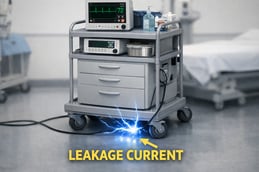
The primary concern with electronics on a medical cart is leakage current; stray voltage that could pose a serious risk to patients. Medical cart testing for leakage current verifies that if a patient comes into contact with the cart, no harmful voltage will be emitted. For a deeper dive into leakage current standards, the Medical Device & Diagnostic Industry offers excellent resources.
Physical Tests of IEC 60601-1
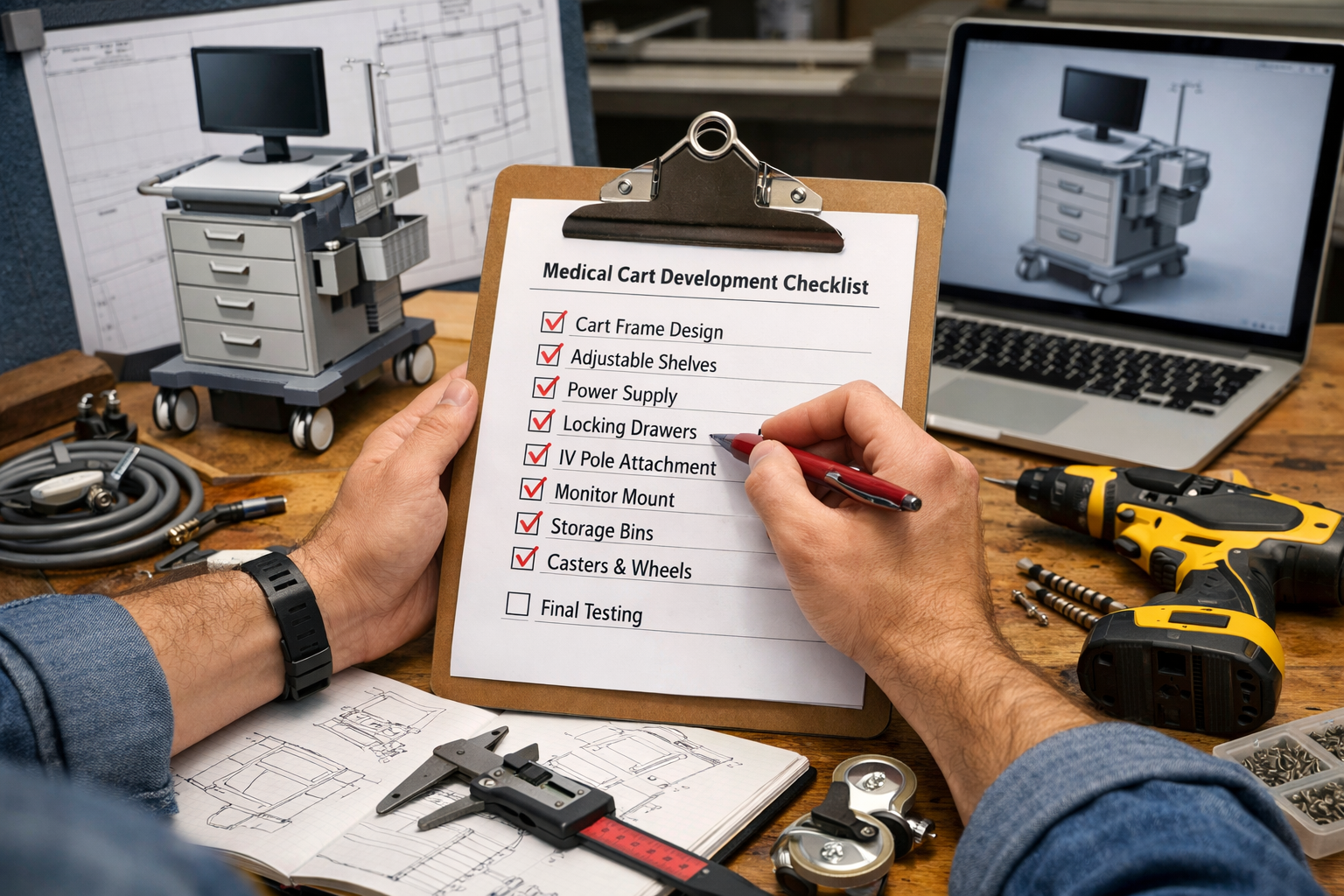
Partnering with a manufacturer that specializes in custom medical carts gives you a significant advantage: they'll understand which tests apply to your product and how to design it with those requirements built in from the start.
Here are the physical IEC 60601-1 tests your medical cart may need to pass:
- Durability of Markings (7.1.3)
- Stability and Transportability (9.4.2)
- Movement Over a Threshold (9.4.2.4.3)
- Instability from Unwanted Lateral Movement, Including Sliding (9.4.3.1)
- Instability Excluding Transport (9.4.3.2)
- Hazards Associated with Support Systems (9.8.2)
- Rough Handling Drop Test (15.3.5)
- Equipment Force for Propulsion (9.4.2.4.2)
While not all manufacturers can formally certify a customer's equipment, many conduct these tests in-house first to ensure the product is ready before it's submitted to an accredited testing lab.
Built-In Power Supply
Medical carts without an integrated power supply or power strip may still pursue IEC 60601-1 compliance. However, depending on the cart's intended use, customers may classify their product as more of a piece of furniture and opt out of electrical testing. This is a legitimate path but it comes with an important caveat: those who forego electrical testing may need to invest in formal risk management.
Does Your Medical Cart Require Risk Management?
Risk management conversations typically begin during the FMEA (Failure Mode and Effects Analysis) process. If unresolved issues are identified and electrical testing has been bypassed, you'll need to engage your regulatory department and implement a risk management plan.
Because every product and use case is different, there's no universal answer. This is a decision best made in close collaboration with your custom medical cart manufacturer — though the final call will always rest with you.