
When a package arrives crushed, dented, or damaged, it's more than just an inconvenience; it's a sign that something in the packaging process failed. For manufacturers and businesses that ship products at scale, leaving packaging performance to chance isn't an option - that's where ISTA testing comes in.
What is ISTA Testing?
ISTA testing stands for “International Safe Transit Association”, the organization that provides packaging testing to various industries to make sure packages are prepped properly to withstand shipping conditions and get to their destination intact.
During ISTA testing, packaged items are put through a series of tests that simulate environmental factors, movement, or impacts that may occur in shipping. It’s important that the item is packaged exactly as it will be for shipment. Depending on the package and how it will be shipped, there are different levels of testing that a package may undergo. The ISTA tests that medical cart packages most typically undergo are 1B, 2B, and 3B.
ISTA Certified Testing Sites
ISTA testing occurs at certified testing sites. Oftentimes, large packaging companies offer on-site testing, and there is also a ISTA website directory to find a testing site.
When Does ISTA Testing Occur?
Packaging testing typically occurs once all revisions and modifications are completed from the prototyping process. Once there is a final approved product and the packaging has been designed, the packaged product can be sent to a lab for ISTA testing.
Important ISTA Testing Series
ISTA organizes its tests into numbered series where each test is designed for a different level of rigor or a specific distribution environment. Some of the most common procedures for ISTA testing medical carts are Procedure 2B (Packaged-Products weighing over 150lb) and Procedure 3B (Less-Than-Truckload Shipment). Working with the medical cart manufacturer and the testing facility is important to determine the testing procedure that will replicate actual future shipping conditions.
ISTA 1 Series – Non-Simulation Integrity Tests
The 1 Series focuses on basic integrity testing rather than simulating a specific distribution environment. These tests are pretty straightforward and are often used as a starting point for smaller companies or low-risk products. They evaluate whether a package can withstand general mechanical hazards.
ISTA 2 Series – Partial Simulation Tests
The 2 Series includes both general mechanical hazards and limited climate conditions. These tests are widely used by many retailers as proof of packaging suitability. ISTA 2A is one of the most commonly referenced protocols in retail and e-commerce packaging.
ISTA 3 Series – General Simulation Performance Tests
The 3 Series replicates specific distribution environments (ex: truck, rail, or air transportation) with greater accuracy. ISTA 3A is well-known and is usually required for Amazon's Frustration-Free Packaging (FFP) and other retail-ready packaging programs.
ISTA 6 Series – Member-Developed Tests
The 6 series includes customized test protocols developed with specific retailers or industry members. These tests are tailored to meet the exacting standards of large-scale distribution.
ISTA 7 Series – Development Tests
The 7 Series provides tools for packaging engineers to use during the design and development phase. These tests help identify weaknesses early so issues can be managed before a final protocol is run.
For more information about the different test procedures and what each procedure includes, see the ISTA website’s Test Procedures Page. '
Example of ISTA Testing Series
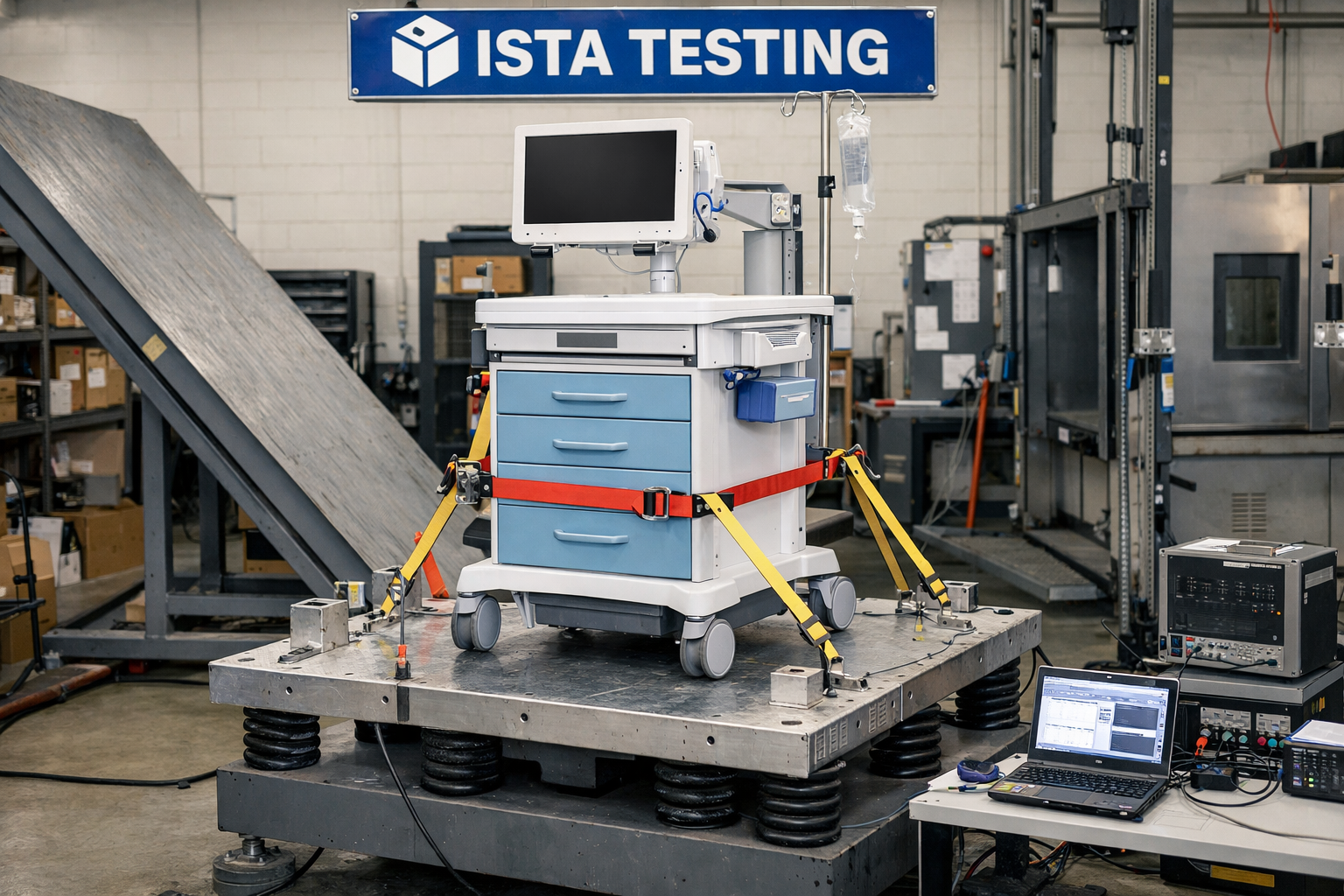
One testing series that an HUI medical cart package typically undergoes is procedure 2B, where the package is tested by:
- Atmospheric testing, in which the package is exposed to varying levels of heat, cold, and humidity to test the integrity of the package itself and any protection offered to component pieces that may be heat, moisture, or cold-sensitive.
- Compression, in which hydraulic plates press on the package to determine how packages hold up to top loading and stacking.
- Vibration, in which the package is placed in its normal shipping position and subjected to vibration for an extended period.
- Horizontal impact testing, in which the package is subjected to impacts on all sides in the vertical position to simulate another item hitting the side of the package.
- Handling/dropping, in which one edge is raised a short set distance off the ground and then dropped to simulate being dropped during handling.
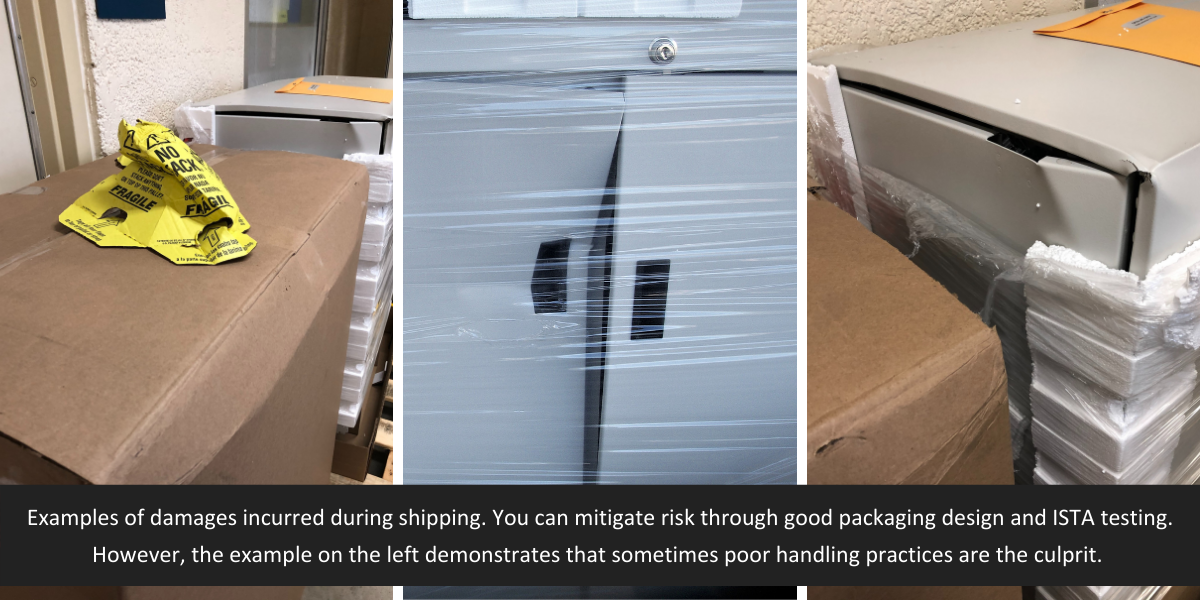
After the testing is completed, the package or crate is examined for signs of damage. When testing new packaging, engineers sometimes go to the testing facility to open the package and inspect the product itself immediately following the testing. It is important to note that even if there are no visible signs of damage to the exterior of the crate or palletized load, the product inside can incur damage.
Benefits of ISTA
- Fewer damaged products
- Efficient and cost-saving packaging
- Better brand reputation
- Meeting e-commerce / retail requirements
Ultimately, ISTA testing is about making sure the packaging actually does its job — protecting the product from the moment it leaves a facility to the moment it reaches the customer. The time and money put into testing upfront will save any company far more in damage, returns, and headaches down the road.
If you work with medical carts, there's other layers of compliance worth knowing about including ASTM 4169-22 Distribution Cycle 12 (for freight) and IEC 60601. Download our free infographic on IEC 60601 sample tests for medical carts to see exactly what tests apply and what to expect from the process.