Cardiology departments run on precision. Every crash cart, EKG cart, and mobile monitoring station has to do more than just hold equipment, it has to keep pace with fast-moving clinical workflows, protect sensitive electronics, and withstand daily wear; that's why choosing the right cardiology equipment cart manufacturer is one of the more consequential procurement decisions a hospital or clinic makes.
This guide explains what separates the best cardiology equipment cart manufacturers from the rest, so you can evaluate vendors with confidence rather than just comparing price sheets.
Why the Right Cart Manufacturer Matters
A poorly designed cart can create real friction in patient care: drawers that jam during a code, cable management that turns into a tangle of wires, or a frame that can't support the weight of a defibrillator and monitor together. These potentially small errors add up into lost seconds when seconds count.
The best manufacturers understand that a cardiology cart is a piece of clinical infrastructure, not just furniture. They design around real workflows, test for durability, and build in the flexibility to adapt as equipment changes over time.
What to Look for in a Cardiology Equipment Cart Manufacturer
1. Purpose-Built Designs for Cardiac Care
Cardiology carts aren't one-size-fits-all. Look for manufacturers offering configurations specific to your use case:
- Crash carts / code carts with locking drawers and tamper-evident seals for emergency medication and defibrillation equipment
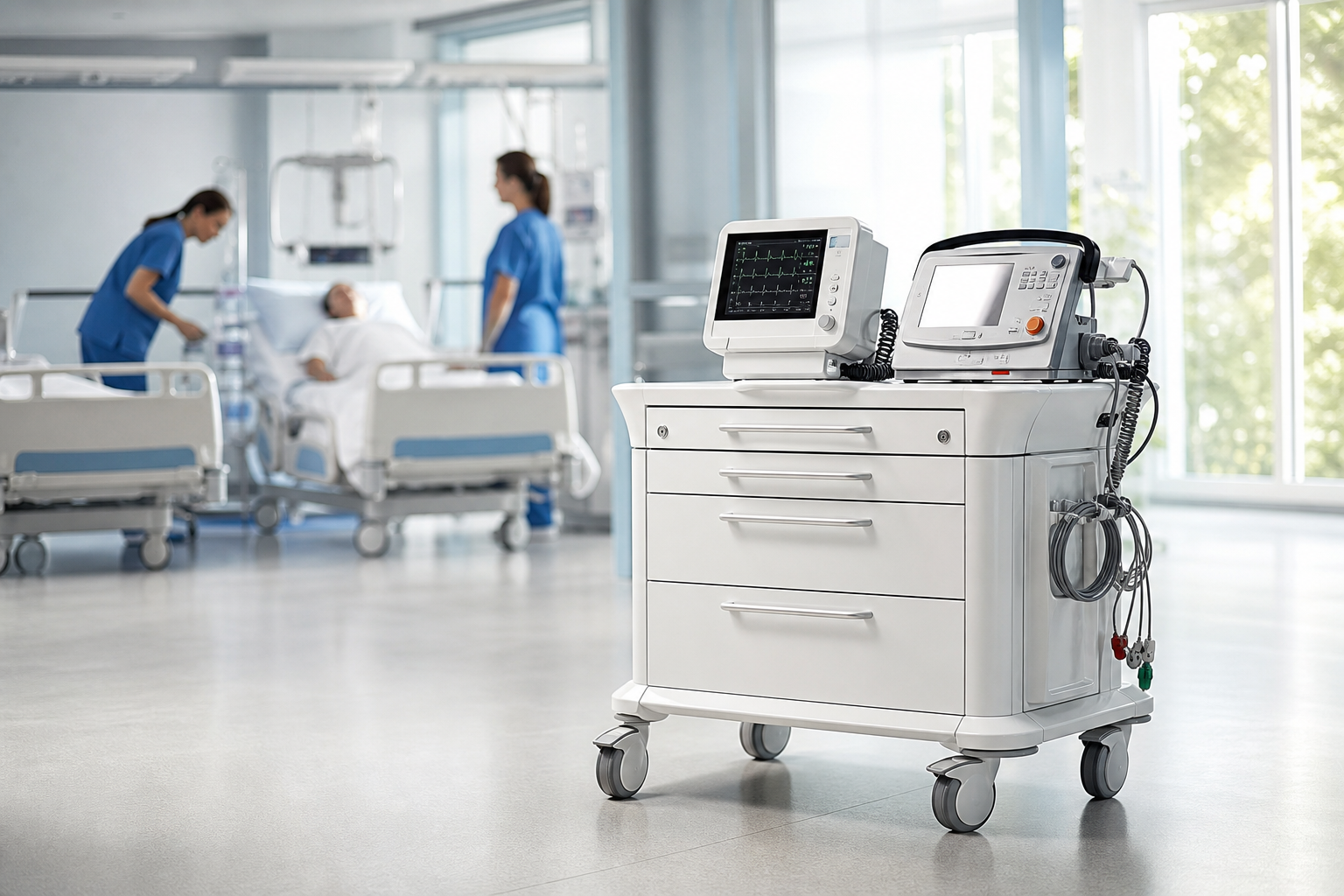
- EKG and monitoring carts with adjustable shelving and integrated cable management for leads and cords
- Cath lab carts built for sterile environments, often with wipeable, non-porous surfaces
- Mobile workstation carts that support laptops or tablets for bedside charting alongside cardiac monitoring devices
2. Build Quality and Materials
The best manufacturers use medical-grade materials, like powder-coated steel, high-density polymer, or aluminum frames, that resist corrosion, withstand disinfectants like bleach and ammonium, and hold up over a 10+ year lifecycle. Ask about weight capacity, caster quality (medical casters should roll smoothly and lock securely), and warranty terms, since these details tell you a lot about how a cart will perform after years of daily use.
3. Customization
Hospitals rarely want an identical cart to every other facility. Leading manufacturers offer modular components (ex: swappable drawers, adjustable shelf heights, add-on IV poles, oxygen tank holders, and power management systems) so a single cart platform can be configured for different departments or adapted as technology changes.
4. Power Management and Cable Organization
Modern cardiology equipment relies on substantial power and complex cable connections. Top-tier carts include integrated power strips, battery backup options, and dedicated channels for organizing cords, which reduces clutter and trip hazards in high-traffic clinical areas.
5. Compliance and Certifications
Any manufacturer worth considering should be able to speak clearly to regulatory compliance. This would include relevant FDA registration for medical carts where applicable, ISO manufacturing certifications, and adherence to infection-control standards. Don't hesitate to ask for documentation directly.
6. Service, Support, and Lead Times
Even the best-built cart eventually needs replacement parts or maintenance support. Evaluate manufacturers on:
- Availability of replacement parts and how long they commit to stocking them
- Responsiveness of customer service and technical support
- Realistic lead times for both standard and custom orders
- Willingness to provide references from other healthcare facilities
7. Track Record with Healthcare Facilities
Experience matters. Manufacturers with a long history of serving hospitals, outpatient cardiology clinics, and cath labs will have already worked through the practical problems that come up in real clinical settings; problems a newer or more generalist cart manufacturer may not have anticipated.
Considerations Before You Buy
Before committing to a manufacturer, it's worth requesting:
- A live product demo or sample unit for hands-on evaluation by clinical staff
- Documentation on weight limits, materials, and cleaning compatibility
- Pricing for both single-unit and bulk/fleet orders
- Customization options and associated costs
- Warranty details and average part replacement turnaround
There's no single "best" cardiology equipment cart manufacturer for every facility. The right choice depends on your department's workflow, space constraints, budget, and the specific cardiac equipment you need to mobilize. The strongest approach is to shortlist manufacturers based on the criteria above, request demos, and involve the nurses and technicians who'll actually use the carts every day in the final decision.
A well-chosen cart doesn't just organize equipment; it becomes a quiet, reliable part of how your team delivers fast, safe cardiac care.