
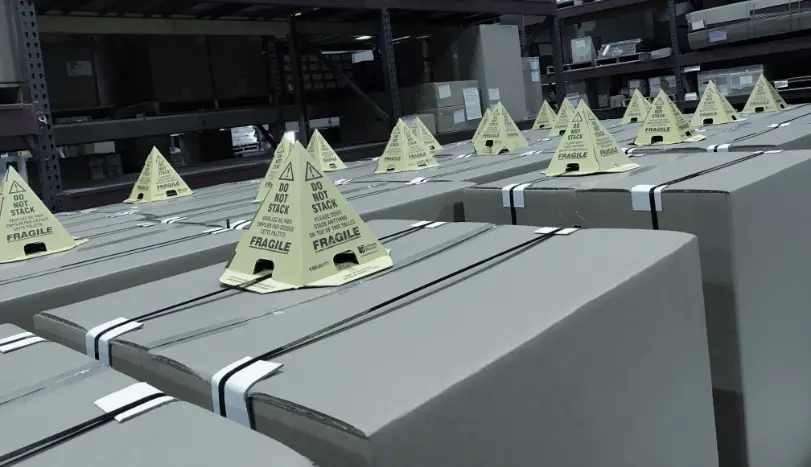
Effective medical device packaging design protects the product, streamlines the assembly, and keeps your final costs under control. Below, we break down the three main goals of medical device packaging design, when it should enter your development process, the materials commonly used, and the lessons we've learned building packaging for medical carts over the years.
Three Main Goals For Packaging Design
There are three main goals to keep in mind when approaching medical device packaging design for your medical cart:
- Protection: Safeguard your product from mechanical or environmental damage in transit.
- Ease-of-use: The design should be easy for assemblers to pack and ship, simple for material handlers to manage at the other end, and should ensure end-users have everything they need to uncrate and assemble the unit when it arrives.
- Cost considerations: Balance protection and ease-of-use with the material costs of the packaging itself.
When To Start Packaging Design For Your Medical Device Cart
Although shipping is the last step in the medical cart manufacturing process, it's a critical phase in ensuring the device and cart arrive at the end-user ready to go. At HUI, we recommend conversations about medical device packaging design and shipping start as early as possible to avoid unpleasant surprises later on.
Shipping Together vs In Parts
Your device cart manufacturer should be asking you some key questions early in the design process that will affect how the packaging for your medical cart, cabinet, or enclosure will be designed. The main question being, will the device and/or cart ship fully assembled?
-
Fully Assembled: In this case, each unit may need to ship on its own pallet and will need additional bracing material to hold it in place.
-
In Parts: If the units will be shipped partially assembled or disassembled, you’ll need to think about how those units will be unpacked and prepped for further assembly.
The best practice is to begin with the end in mind: smart packaging can help error-proof the follow-on assembly process and prevent component pieces from getting lost. It’s a good idea to kit the assembly pieces and fasteners together so that everything is ready to go to assemble each unit. This may require “boxes within boxes” that will then be loaded together. Keep in mind that there will be higher costs associated with the extra packaging material that may be cost-prohibitive, especially for small quantity runs.
Common Materials Used
Some of the most common materials used in medical device packaging is cardboard, foam inserts, and wood crates.
- Cardboard is cost-effective and makes up a large share of the packaging material used to ship medical carts. However, on its own, cardboard doesn't offer the stability and protection many products require.
- Foam inserts are often combined with cardboard and wood to prevent the medical device from tipping or moving in transit with engineered foam cutouts providing maximum stability. Foam offers excellent protection, but it isn't the most environmentally friendly material and if you're exporting to Europe, research material sustainability requirements before finalizing your design.
- Wood crates, made of heat-treated wood, add stability for partially or fully assembled units. There's an added cost, but it can pay for itself by reducing the likelihood of damage.
Note: Make sure to ask your medical cart manufacturer about options for re-usable packaging as well. With good design and materials, we can often create a packaging solution that can be used in transit from our facility to our medical device manufacturer customer and then re-used again from their facility to the end-user. Not only does this spread out your packaging costs, but it’s also more sustainable as well.
Lessons Learned in Medical Device Packaging Design
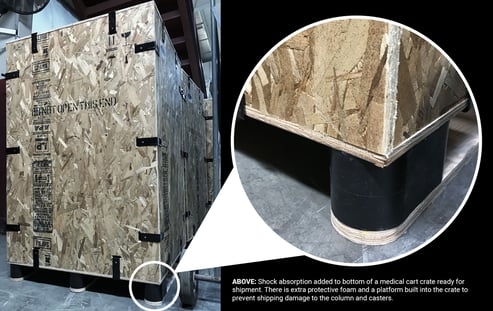
One of the key considerations we’ve found is understanding the need for cushioning and shock absorption to protect the product and eliminate shipping damages that may occur.
In particular, the casters on the base of our medical carts are sensitive to damage. The weight of the cart and the motion of the shipping container can put too much stress on the casters, resulting in damage and delays. We will often build a platform into the shipping container that suspends the base and casters off the bottom. Casters on fully-assembled carts are also one key area that benefits from the extra protection of foam. We frequently apply foam inserts in the base of the container with cut-outs that cradle each caster for additional stabilization.
Some movement of the shipped container can’t be avoided. To further prevent damage and stabilize the entire unit, we often build shock absorption into the actual skid.
Key Takeaways for Medical Device Packaging Design
- Don’t wait until the end of the process to discuss packaging. Have a conversation with your cart manufacturer early on to determine your shipping options and needs. Good packaging doesn’t just happen – it’s designed. Communication at the outset will enable your manufacturer to work with you to protect your investment and keep you on time and on budget.
- Good packaging can be expensive -- but it will reduce errors and assembly time, and keep you and your customers happy.
- Be prepared to test the packaging and look for ways to improve it. As time goes on, new materials and products may be available, so it makes sense to re-visit your packaging design periodically.
Learn More
Watch this episode of “What’s Up With Nick and Chuck” to learn more about medical device packaging or see our previous blog posts on packaging and shipping.